The Lights Went Out. The Kitchen Didn’t.
Twelve hours of blackouts a day. Shelling most nights. A fundraiser for a second generator, completed in 48 hours by volunteers and subscribers. In the first quarter of 2026, Chervona Kalyna Kharkiv cooked, delivered, and showed up — every single day.
Reported by the Chervona Kalyna Kharkiv Foundation | Adapted for international readers
KHARKIV, Ukraine — Q1 2026 Report | January – March 2026 | chervona-kalyna.org
On the morning of January 26, the Chervona Kalyna Kharkiv foundation posted an unusual message. Recent shelling of the city had triggered power cuts of ten to twelve hours a day. One volunteer had already bought the foundation a portable power station. It wasn’t enough.
The foundation asked its subscribers for help buying a second one. The appeal was direct, practical, and without self-pity. The money came in within two days. By the time February arrived, the kitchen was running again at full capacity.
That exchange — the problem stated plainly, the community responding — captures something essential about how this organisation operates in its fourth year of war. Chervona Kalyna Kharkiv does not dramatise. It identifies what is needed, finds the people who can help, and gets back to work.
“The bakery kept running. The kitchen kept running. And the volunteers kept weaving camouflage nets for soldiers — in the dark.”
JANUARY
Blackouts, Borsch, and Legal Advice
January was cold and difficult. Kharkiv sits roughly 30 miles from the Russian border, and the winter shelling was heavy. But the first week of the year brought food distributions, charity lunches at St Peter and Paul Church, and the foundation’s regular field trips to villages that have become part of its annual rhythm.
On January 23, volunteers drove to the village of Khvorostove in the Kharkiv region. They delivered food packages, hygiene supplies, and sweets for children. The village gave back vegetables, oil, eggs, and home preserves for the Kitchen of Kindness. The foundation named the donors individually in its post, as it always does: Natalia Khvorost, Oleksandra Krysko, and the other residents who filled the boxes.
The same day, the team visited the villages of Baranove and Rohivka. Same pattern: aid delivered, produce received, names recorded. Starost Mykola Petrenko, Viktoria Petrenko, Valentyna Mizyak, Antonina Dudnyk. The foundation’s posts read like a community ledger: everyone who gave something is acknowledged.
On January 13 and 26, the foundation hosted two free legal consultation sessions for internally displaced people. The questions brought to these sessions — IDP status, social payments, document recovery, housing, family law — map the bureaucratic labyrinth that displaced people must navigate on top of everything else.
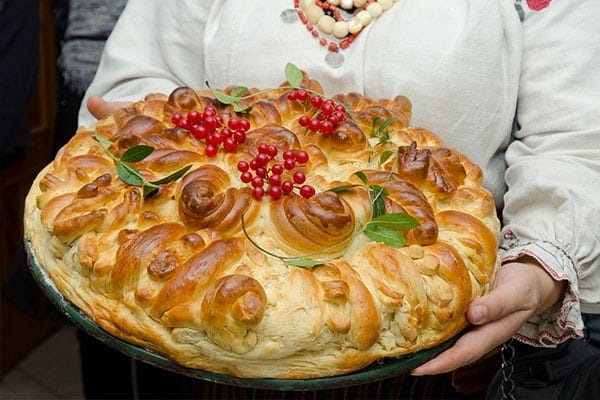
A new partner arrived in January: the Ternopil Charitable Foundation, which donated nappies and baby food for displaced children. The foundation’s baker, Olena Kolomytseva, celebrated her birthday. The post about it described her as “Baker with a capital B” and thanked her for “warm pastry that warms hearts.”
January partners: CAMZ · Food Bank Ukraine · Nova Poshta Humanitarian · Ternopil Charitable Foundation · Caritas Kharkiv (legal)
FEBRUARY
February 24: Four Years. An Open-Air Lunch.
February 24, 2026, was the fourth anniversary of Russia’s full-scale invasion of Ukraine. In Kharkiv, the day began the way most days begin — with the possibility of shelling.
Chervona Kalyna Kharkiv marked the anniversary by cooking for people outside. The foundation set up an open-air lunch at several locations across the city for internally displaced people from the Kharkiv region, with particular attention to families from the Vovchanska community — a front-line area that had seen some of the worst fighting. About 200 people came. They received field porridge, vegetable cutlets, hot tea, pastries, fresh bread from Good People bakery, and cupcakes.
Four partner organisations made it happen: H.U.G.S. (Helping Ukraine — Grassroots Support), a grassroots international solidarity network; Good People; Food Bank Ukraine; and CAMZ. The foundation’s post about the day was one sentence longer than usual. It ended: “Because together — we will hold on.”
“We wanted to give our people not just a hot meal, but the feeling of support, unity, and hope. Because together — we are strong.”
The rest of February was defined by the blackouts. On February 17, the foundation posted a short video. The message was simple: despite no electricity and no heating, the bakery is running, the kitchen is running, and the volunteers are weaving camouflage nets for soldiers at the front. The post did not explain how. It just showed that they were.
That same week, H.U.G.S. donated clothing for displaced residents. CAMZ delivered medicines, vitamins, and food packages. The foundation distributed all of it. On February 26, after a night of shelling, the team drove to locations across Kharkiv to bring pastries, biscuits, and hot tea to the communal workers clearing debris — the people who fix the city after every attack.
February partners: H.U.G.S. (Helping Ukraine — Grassroots Support) · Good People · Food Bank Ukraine · CAMZ · Nova Poshta Humanitarian
MARCH
Into the Dormitories
March brought a shift in format. The foundation had been serving displaced people at St Peter and Paul Church and through field distributions for three years. In March 2026, it began taking hot meals directly into the dormitories where displaced people live.
These are not temporary shelters. Many of the people living in Kharkiv’s repurposed student dormitories have been there for two years or more. They fled shelling, arrived with almost nothing, and stayed because there was nowhere safe to return to. A charity lunch at a church is one thing; a van pulling up to your building with a pot of kulish — traditional Ukrainian grain porridge — and a team of people who know your name is something else.
The foundation made at least three such visits in March. On March 18, the menu was kulish, vegetable burgers, homemade pastries, hot tea. The post afterwards described the goal: “not just to feed, but to give the feeling of attention, calm, and humanity. Every meeting is about support, conversation, and faith in better things.” On March 26, a new partner joined for the first time: the Dreams of the World Charitable Foundation, which came alongside for a dormitory visit.
On March 27, the foundation held another field lunch for displaced people — kulish again, hot tea, fresh bread and cupcakes from Good People. Samaritan’s Purse returned to the partnership in March with food packages for IDP families.
The field trips to villages continued. On March 5 and 6, volunteers drove to Baranove, Rohivka, and Khvorostove — the same communities they had visited in January. Aid in; produce out. The foundation received vegetables and food for the kitchen. The village communities received supplies and, in the case of Khvorostove, what the foundation described as “warm conversation and mutual support.”
On March 4, the Kharkiv Employment Centre helped the foundation unload a humanitarian cargo delivery, coordinating IDP workers for the task. On March 7, volunteer Natalia Yukhno celebrated her birthday. The foundation wished her “strength, inspiration, and people around you who are worth the effort.”
March partners: CAMZ · Food Bank Ukraine · Good People · Samaritan’s Purse · Dreams of the World CF (new) · Nova Poshta Humanitarian · Kharkiv Employment Centre
Q1 2026 BY THE NUMBERS
- Hot meals and field lunches served — more than 5,500
- Food, hygiene, and medical packages distributed to IDPs — more than 2,500
- Free legal consultation sessions — 2 (IDP status, documents, social payments, housing)
- Dormitory outreach visits with hot meals — 3+
- Villages reached through field outreach — 3 (Khvorostove, Baranove, Rohivka)
- Open-air lunch on Feb. 24 — approx. 200 displaced people fed
- Community fundraiser for power station — completed in 48 hours
- Camouflage nets woven for soldiers — ongoing throughout the quarter
- New partners — 2 (H.U.G.S., Dreams of the World CF)
Figures are based on posts published on the foundation’s official Facebook page for January–March 2026.
WHAT THE QUARTER SHOWED
The Same Answer, Every Time
Three months of blackouts, shelling, and cold did not change the basic pattern of what Chervona Kalyna Kharkiv does. The kitchen ran. The volunteers showed up. The villages exchanged aid for produce. The lawyers came and answered questions. The pastries arrived at the church.
What changed in Q1 2026 was the reach. The foundation extended into dormitories that most organisations don’t visit. It held a lunch outside on the anniversary of the invasion, when most people would have stayed indoors. It launched a community fundraiser for a piece of equipment — a power station — and the community responded within 48 hours.
Each of these is a small thing in isolation. Together, across three months, they describe an organisation that has learned to operate in wartime not by scaling up bureaucracy, but by staying close to the people it serves and adapting to whatever the week brings.
The fourth year of this war looks a lot like the third. The kitchen is still running.
SUPPORT THE FOUNDATION
If this report moved you, consider making a donation. Everything helps — a power station, a batch of flour, a set of food packages for a family that arrived in Kharkiv last week with nothing.
Donate: chervona-kalyna.org/en/donate/
Become a volunteer: chervona-kalyna.org/en/become-a-volunteer/
Previous reports: chervona-kalyna.org/en/category/reporting/
Website: chervona-kalyna.org/en/
Facebook: facebook.com/ChervonaKalynaKharkiv
Together — to Victory. Together — we are stronger.
Want to participate in fundraising?
Do your part to help war victims get the vital support they need!